Build an Accessibility Test Plan That Keeps Its Limits
Start with real tasks, named access tools and a narrow claim. A checklist can reveal barriers, but it cannot replace disabled users or establish legal conformance.
This task records scoped evidence. It is not accessibility certification, legal advice or a universal result.
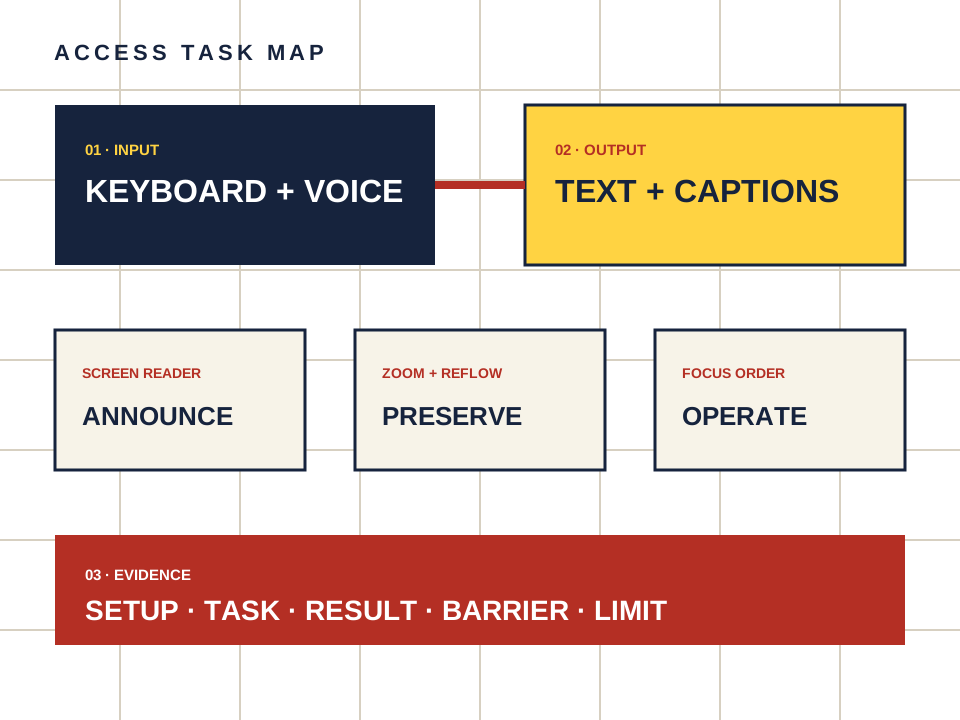
What this page owns
Build a scoped AI companion accessibility test plan.
Begin with the named task and preserve the setup. Do not turn a product statement, automated scan or reachable page into proof that a person can complete the task.
Four steps, one documented result
- 01
Choose three essential tasks such as opening chat, sending a message and finding account controls.
- 02
Name the browser, device, input method and assistive technology used.
- 03
Record pass, barrier or not checked for each task instead of averaging unlike results.
- 04
Repeat after material interface changes and preserve the date and limitation.
Make the observation reproducible
- Setup
- Device, operating system, browser, input method and assistive technology.
- Task
- Starting point, action and expected outcome in plain language.
- Result
- Pass, barrier observed or not checked — never a guessed score.
- Limit
- A useful plan says exactly what was attempted and what remains unknown. It does not award a universal accessibility badge.
Keep the route separate from the evidence.
Candy AI is one adult companion service discussed here. The link below may earn us a commission. It does not change the method or create an accessibility endorsement.
Open Candy AI — sponsored